

unwholesome actions : ค้นหาหนังสือธรรมะ หน้า 3 / 3
หน้าหนังสือทั้งหมด
156
Purification of the Mind: A Path to Enlightenment
3. Purify the mind: Keep one's mind bright and clear all the time, while inhaling and exhaling. If a person inhales and does not exhale, that person's life will come to an end. Death bears no sign of
This text emphasizes the importance of maintaining a clear and bright mind through inhalation and exhalation. It explains how a person's mental state can determine their spiritual fate in the afterlif
106
The Vehicle of Abandoning and Meritorious Actions
The Vehicle of Abandoning
10. Pūrṇa - kiriya - vatthu
Here, bhikkhus,
a certain person has done meritorious actions founded on giving gifts significantly, meritorious actions founded on virtues signi
บทความนี้สำรวจความสำคัญของการกระทำที่มีบุญที่มีรากฐานมาจากการให้ของขวัญและคุณธรรม ตามคำสอนในพระพุทธศาสนา หลังจากความตาย บุคคลที่ทำการกระทำที่มีบุญจะเกิดขึ้นในภพที่ดีขึ้น โดยมีการพูดถึงการเติบโตในทางที
129
The Formation of Habits and Teaching Morality
Suzanne Jeffrey
which will lead to destructive thoughts and eventually into darkness. So, as we can see,
different habits lead to different lives. All of our habits come from our early training.
“Ho
This text discusses how habits develop from early training and repeated actions, and emphasizes that both good and bad habits influence our lives. It highlights the need for teachers to first correct
21
Understanding Kilesa and Its Influence on the Mind
Kilesa is an element that soils the mind, invading it with great intensity to override the rational and, if allowed to, is ultimately the cause of mental suffering. Kilesa does not reveal its insidiou
Kilesa is an intrinsic element that corrupts the mind, causing mental suffering and overriding rationality. It acts like a hidden virus, lying dormant within the mind from birth. When viewed through D
23
The Power of Honest Work and Meditation
When doing honest work the mind becomes less clouded, becoming brighter, which will help facilitate the practice of meditation. This will be the beginning step to reach the inner light and the absolut
Honest work illuminates the mind, paving the way for successful meditation. This journey creates good habits and positive energy, fostering happiness and health. Conversely, dishonest actions breed ne
28
Understanding Kamma and Its Impact on Our Lives
accumulating bad kamma they are like prisoners in their own kammic cells, unaware of their perpetual imprisonment. Unfortunately, as aforementioned, this prison of life is so vast that we cannot see t
This text discusses the nature of kamma and its profound impact on our lives, likening bad kamma to a prison that limits our awareness and actions. It emphasizes how thoughts, speech, and actions dire
125
Understanding Key Buddhist Concepts
"Fools" (palay): spiritually defective people. A fool is someone wicked, weak, or feeble in a moral sense. His discretion is faulty, not knowing right from wrong, good from bad. A fool is one who give
This content delves into various Buddhist concepts such as 'fools'—spiritually defective individuals whose actions reflect moral weakness. It explains that heaven in Buddhism comprises six levels prov
94
Understanding Merit and Demerit: The Law of Karma
The opposite of merit is demerit, or ‘sin’. Demerit is the product of bad deeds. Bad deeds cause ‘bad karma’. Demerit is a negative energy that is created when a bad deed is performed: mentally, bodil
The opposite of merit is demerit, representing the consequences of bad deeds which cause negative karma. Both good and bad deeds are governed by the Law of Karma, where actions determine outcomes in t
8
กรรมและผลของกรรมในชีวิต
ไม่เกิดแต่เหตุผลมีแต่เท่านั้น ผลไม้ดี....ไม่เกิดแต่ เมื่อใดมีความคิดว่า เราทำไมดีแต่กลับได้ดี หรือเขาทำไมดีแต่กลับได้ดี ก็ยังรู้ว่าเมื่อฉันกำลังหลงคิดผิดจากความจริง...กำลังเข้าใจฉันผิดจากความจริง.....
บทความนี้พูดถึงความสัมพันธ์ระหว่างกรรมและผลของกรรม โดยเน้นว่าทุกการกระทำจะมีผลตามมาที่แน่นอน ไม่ว่าจะเป็นผลดีจากกรรมดี หรือผลร้ายจากกรรมชั่ว การเข้าใจเกี่ยวกับกรรมช่วยให้บุคคลมีความคิดที่ถูกต้องต่อชีว
85
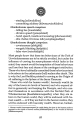
The Path of Wholesomeness and Unwholesomeness
- stealing [adinnāḍāna]
- committing adultery [kāmesumicchācāra]
Unwholesome speech comprises:
- telling lies [musāvāda]
- divisive speech [pisuṇaṅāṭa]
- harsh speech, insults and swearing [pharusavaṭ
In Buddhism, ten unwholesome behaviors are cautioned against: stealing, committing adultery, lying, divisive speech, harsh speech, idle chatter, covetousness, vengeful thinking, and false views. These
89
Understanding Craving and its Effects
yingly frequently, until our seeing wrong as right and harmful things as harmless will be our continuous perspective of the world. We lose our interest to train ourselves in meditation and in the abse
The text discusses how craving influences our perceptions and behaviors, comparing it to sticky resin that binds our minds to attachments and sense pleasures. It warns that indulging in cravings leads
32
Living a Celibate Life and the Journey to Nibbana
choose to live celibate lives. One solution is to select
specific dates to observe The Eight Precepts which
prohibits any sexual relationship, such as on Buddhist
Holy days or on birthdays. This compr
This text discusses the choice of living a celibate life within Buddhism, highlighting how observing The Eight Precepts on certain dates enables individuals to meet their spiritual obligations. It ref
191
The Impact of Media on Buddhism and Monastic Life
they should keep in mind that the Sangha Council has
jurisdiction over a monk's case. When a final judgment is
made, people should not criticize or comment on it. If people
do, in Buddhism it is consi
The text discusses the jurisdiction of the Sangha Council over monk cases and the implications of negative media coverage on Buddhism. It emphasizes that while the press reports on misconduct by some
188
Glossary of Buddhist Terms
Part Seven: Appendixes
Kamma (Sanskrit: Karma): neutral word meaning action
with intention; action
Khanti: endurance
Kilesa (also spelled Gilesa): the impure element to our
mind; i. e. passion, lust,
This glossary provides definitions for essential Buddhist vocabulary, including terms like Kamma, which refers to actions with intention, and Nibbana, the ultimate state of understanding. It discusses
191
Understanding the Role of Monks and Media Representation
they should keep in mind that the Sangha Council has jurisdiction over a monk’s case. When a final judgment is made, people should not criticize or comment on it. If people do, in Buddhism it is consi
This text discusses the challenges faced by monks in Thailand due to negative media portrayals. It emphasizes the importance of differentiating between individual misconduct and the overall contributi
226
Understanding Key Buddhist Concepts
Inention, Right (see Right Intention)
internment in the womb, suffering
irritation (see annoyance)
jealousy 50
jewel, wish-fulfilling - metaphor for Middle Way 39
jewel-knowing 110
joy 38, 123, 130
ka
This text delves into central Buddhist themes such as the nature of suffering, the importance of right intention, and the concept of liberation. Key metaphors like the jewel of knowledge and the lion
133
Understanding the Law of Kamma in Family Dynamics
Part Five: Truth for the Family
caution: We should know the mentality of the people
around us! Initially, they may give us moral support.
But once we advance too far and too fast, they may
become anta
Part Five discusses the significance of understanding the timing and locality of our actions when seeking moral support from those around us. It highlights the Law of Kamma, explaining why good deeds
159
Truth for the Family: Essential Practices for Moral Living
Part Five: Truth for the Family
2. Moral Discipline (silamaya) - Observing moral
behavior by restraining our speech and actions to do
only good; not causing turmoil for others.
3. Meditation Practice
Part Five discusses vital practices for families to cultivate a moral lifestyle. It highlights the importance of moral discipline (silamaya), meditation (bhavanamaya), and humility (apacayanamaya) amo
130
The Patience of Growing Good Deeds
After three or four months, although there is still no banana to consume, there will be banana leaves that we can use for wrapping. After eight or nine months, there is yet no banana to eat, but there
This text uses the metaphor of growing banana plants to illustrate that good deeds require time and favorable conditions to yield positive outcomes. Just as banana plants take a year to bear fruit, go
155
Reflections on Death: Cultivating Merit and Purpose in Life
do not know when we are going to die. We must sooner or later be separated from all loved ones and treasured things.
How can people think about death?
1. Thinking about death with the false view: Th
In contemplating death, there are varied perspectives. The false view neglects merit and life’s purpose, while the right view emphasizes the importance of good deeds before we die. Life’s ultimate goa